Showing posts with label tourism. Show all posts
Showing posts with label tourism. Show all posts
Wednesday, 4 February 2026

Sunday, 18 January 2026
Amy Carmichael

In Memory of Amy Carmichael on her 75th Death Anniversary on January 18th.
Living with her in our hearts,
The way she loved Jesus
A love that filled her with joy and peace,
A joy she lived to share with others.
From that love she found the strength
To do what seemed impossible,
To give a home,
To become a mother to the orphaned.
In Jesus she found courage
For every obstacle that crossed her path.
Remembering you, Amy,
Light and inspiration,
A model of love and quiet joy—
Teaching us to give everything
To what we are called to do,
Whatever our life’s circumstances may be.
Tuesday, 16 September 2025
Zundert Flower Parade
Zundert Flower Parade Paints a Town in Dahlias
From bicycles to towering floral sculptures, the Dutch tradition blooms into the world’s largest dahlia parade
ZUNDERT, NETHERLANDS — Each year on the first Sunday of September, the small town of Zundert bursts into colour with the world’s largest dahlia parade, the Bloemencorso Zundert.
What began in 1936 with flower-decorated bicycles in honour of Queen Wilhelmina has grown into a spectacular procession of giant moving floats — some reaching 19 metres long, nine metres high, and 4.5 metres wide. Each float is built by one of the town’s 20 neighbourhoods, using up to eight million dahlias grown locally across 33 hectares of fields.
The work is entirely volunteer-driven. In the final days before the event, residents young and old attach each bloom by hand, in a meticulous process known as prikken en tikken. A children’s parade two weeks later ensures the tradition is passed on to new generations.
Recognised in 2012 as part of the Netherlands’ Intangible Cultural Heritage, the parade now attracts 70,000 visitors annually. Beyond the Sunday spectacle, floats remain on display the following day, with guided “Corsotour” visits to the build tents offering a behind-the-scenes view.
The Zundert Flower Parade is more than artistry in bloom — it is a living symbol of community, heritage, and the extraordinary power of teamwork.
Friday, 6 June 2025
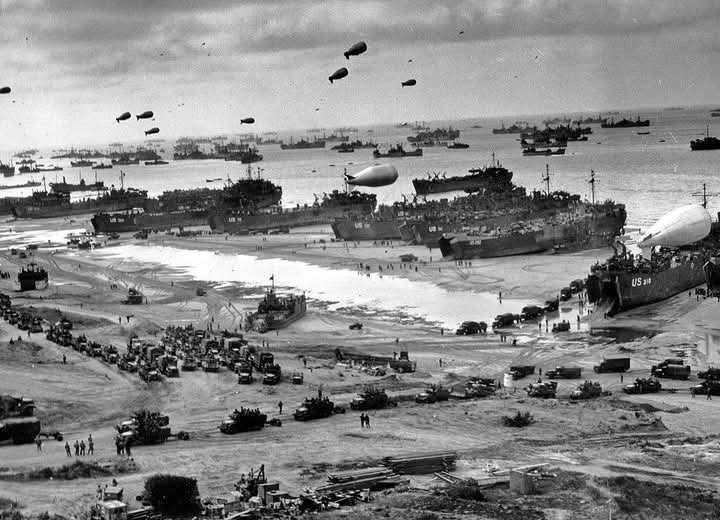
The distant ripple of Normandy at Kochi
The Distant Ripple of Normandy at Kochi
D-Day Remembrance | June 6
On this day, long ago, the winds and the birds that blew and flew over Normandy felt and heard not just the sounds of war, but also the heavy hope of a world yearning for peace.
Though thousands of miles away from those bloodied beaches, the impact of D-Day was deeply felt even in small colonial towns like Kochi, nestled along the Malabar Coast.
On the shores of Normandy, France, over 156,000 Allied soldiers—from the United States, United Kingdom, Canada, Australia, New Zealand, and Free French forces—landed under relentless fire. Many were barely out of their teens. They began that day not knowing if they'd live to see its end.
They did not fight for conquest. They fought through terror, steel, and fire to end the long night that fascism had cast over the world.
In 1944, Kochi was part of British India, tied closely to the fate of the Allied war effort. Families here waited anxiously for news—of sons, brothers, cousins—serving on faraway fronts. War updates crackled through All India Radio, arrived late on newspapers from Bombay, Madras, and Calcutta, and sometimes came in the form of fragile letters from the front that took weeks to arrive.
The Port of Kochi, strategically vital during the war, stood on high alert. Ships came and went. Supplies were loaded. British officers paced its piers. And the people of Kochi—shopkeepers, fishermen, schoolteachers—lived their days under the long shadow of a war that had reached their shores without ever dropping a bomb.
Today, we do not glorify war. We remember the cost of freedom.
Their bravery didn’t just shape the course of World War II—it gave us back the world we know today.
They died with names we may never know, but they live on in every quiet morning, every free election, every child laughing in peace.
Because of their courage, the war did not last another year.
Because of their sacrifice, millions more were spared.
Many young men from Kochi and across India served on multiple war fronts around the world. And back home, their families lived in silent worry, trying to hold together work, faith, and home, clinging to news—any news—that spoke of life.
Let us not reduce their memory to a paragraph in a textbook or a minute’s silence once a year.
Let us live our lives in a way that honours the gift they gave—
a world where peace is possible,
and justice can prevail.
🕯️ We remember them.
🕯️ We thank them.
🕯️ We vow never to forget.
On this day, we also honour the quiet resilience of communities like Kochi that bore the weight of a war fought on many fronts.
The sacrifices made on those distant beaches of Normandy shaped the future even here—
fuelling conversations about freedom and independence that would soon change India forever.
Tuesday, 29 April 2025
The Shade we forgot
Good things happen to bad people.
Bad things happen to good people.
Or perhaps, as age settles in, good and bad simply happen — to old people.
Some call it harmless, but I think it is a quiet injustice that the Aarya Vepu — the noble neem — is now unwelcome in many Christian premises. Once a familiar, healing presence, it is now replaced with trees of little purpose. In the fierce summers of our land, when the skin cracks and the soul grows restless, the neem’s shade was a balm. Its breeze was not only cool but medicinal, a living blessing.
But now we plant പാഴ് മരങ്ങൾ — barren trees, soulless ornaments.
Who will speak for nature when even memory begins to forget?
Long ago, in a different land, giants walked among men.
The Anakim were among them — a race of great size and strength, descendants, it was said, of the Nephilim, those ancient offspring of fallen angels and mortal women. It was a bloodline cursed by heaven itself, a remnant of a time when the boundaries between earth and the divine were recklessly crossed.
God judged the fallen angels harshly; their children, the Anakim, remained — living in the hill country of Canaan.
When Joshua led the Israelites into Canaan, it was said he waged war against the Anakim, driving them out and destroying many. Yet some escaped and found refuge in a city called Gath — one of the last strongholds of their kind.
Generations later, from Gath came Goliath, the giant who defied Israel and fell to the sling of young David. Goliath, and perhaps his brothers, were the lingering echoes of a forgotten race, remnants of a war that stretched back to myth and mystery.
It is worth remembering: the Philistines, who lived in that land during David’s time, were themselves newcomers — migrants from distant shores of the Mediterranean. Like Joshua’s people, they too were not the original children of the soil.
History, like memory, is never as simple as we like to believe.
Here, in our own land, when Western medicine was rare and costly, our grandfathers revered the neem — Azadirachta indica — for its healing powers. Its leaves, bark, and breath were our shield against sickness, our answer to summer's cruelty.
Now, we forget.
We forget the sacred tree that gave without asking.
We forget that refuge is not always something we build — sometimes it is something that grows.
And the land, like a patient giant from forgotten days, waits in silence under the merciless sun.
Saturday, 15 March 2025
The Kumblanghi Glow
Kavaru Season Begins in Kumbalangi: Discover the Mesmerizing Bio-Luminescence in Kochi
Remember the stunning electric-blue glow in the romantic scene from the hit Malayalam film Kumbalangi Nights? That breathtaking phenomenon, known locally as Kavaru, is once again lighting up the coastal hamlets of Kochi. This natural spectacle draws visitors to the sprawling pokkali fields, where hundreds of acres come alive with a vibrant blue or neon green luminescence.
What is Kavaru?
Kavaru is a rare bio-luminescent phenomenon that occurs when water, rich in high salinity during the summer months, emits a bright electric blue or neon green light. The best places to witness this magical display are the villages of Kumbalangi and Chellanam, known for their vast pokkali paddy fields. Last year, these locations saw a surge of tourists eager to experience the captivating glow.
Why Does Kavaru Occur?
The phenomenon is caused by microscopic organisms—bacteria, algae, plankton, and fungi—that emit light in response to increased salinity in the water. These natural organisms produce what’s called "cold light" as a defense mechanism to attract mates and deter predators.
Kavaru at Chellanam and Kumbalangi

Last year, Kavaru appeared as early as February in the pokkali fields of Kumbalangi. However, this year, the mesmerizing glow has been mostly spotted around Chellanam, albeit with a slight delay, possibly due to high tides. Local residents also note that the luminescence tends to be dimmer when moonlight is strong, typically appearing after 2 am. As mid-March approaches and the full moon wanes, you may be able to catch the enchanting glow from dusk onward.
Plan your visit to these scenic villages and immerse yourself in the magic of Kavaru—an unforgettable natural wonder that lights up the night!
Tuesday, 20 August 2024
Letters
A picture by Cecil Beaton. 1940.
London was bombed out but people picked themselves up and carried on as if nothing has happened. Courage. May that generation never go out of our memory.
*Keep calm and carry on.*
May those days never return.

Wednesday, 3 August 2022
The story of Twins - Anna & Herman Scheipers
The story of
Rev. Herman Scheipers (a catholic priest) and his twin sister Anna Scheipers.
In the April of 1945 when Herman broke the line of the prisoners, who
were being marched to their death by the SS officers, his run was spotted by
the last guard in the line whom he heard shout at the soldier with the dog to release the dog to catch the
escapee. But the dog handler was too tired from the endless march and was
resting against a tree that he didn’t bother. Reverend Herman Scheipers had
chosen the right moment for his escape.
We have heard many sad stories about the Jews and how badly they were
treated by the Nazis during the World War II. Here is a life story of
German Catholic twins, who like many, also went through a similar tragic
experience.
The twins usually bond deep with each other. Herman Scheipers and Anna
Scheipers were twins born on 24th July 1913 to a catholic family of
Mǜnsterland, which was one of those few catholic towns in the mostly Protestant Northern
Germany.
Anna’s brother Herman was ordained a catholic priest in 1937 at Saxony. He was a very pious young man with a deep faith and had tremendous passion for his call. His blue eyes spoke of the intense devotion to his cause in all the pictures which his family had kept from the time. His ministry required him to offer mass for the Polish forced labourers, Poland was then considered as the “Enemy of the State” by the German Government. Unfortunately, Priest Herman was arrested and jailed for this crime and was sent to the Dachan Concentration Camps which was infamously known as the ‘Priests Barracks’. There were around 700 catholic priests at the camp.
 |
| Anna & Herman before the war |
Despite all the dangers involved in contacting a prisoner of the state,
Anna, kept in touch with her brother through letters. In the August of 1942,
Anna received a letter from Herman telling her in Code words that he has fallen
sick and will be soon sent to the Gas Chambers for immediate elimination. Sick
prisoners were a liability and considered a mortal danger to the rest of the
camp.
It was difficult to track prisoners in those days, without giving up
hope, Anna went to Berlin to the Gestapo headquarters with her father and with
much difficulty found out the officer who was in charge of the Dachan Camps and
pleaded with him for the release of her brother. Gestapo had no mercy. Having
lost all her hope as a last resort she lied to the officer and tricked him to
believe that if the priest is killed there will be an uprising in Munsterland;
the folks there already know about their priests are being held as prisoners
and executed for no fair reason. The trick worked as the Gestapo thought, if
the unrest as Anna claimed was real, it may spread to other areas and become
unmanageable. On that day Anna saved not only her brother but many hundreds of
priests who were scheduled to be killed at the Dachan Camp.
Herman was out of immediate danger for the time being but he was not
released, instead he was sent to another camp where they were conducting
medical tests on prisoners. The camp Herman was sent to, were conducting tests
for the German air force, ‘Luftwaffe’. He was along with others forced to lie
down in a tub filled with Ice Cold water in full pilot gear for more than a half
day and when they collapsed, they were revived and forced again. Many died
during these tests. Herman somehow survived.
In April 1945 when Germany realized they were going to lose the war, the
prisoners were rounded up and sent on a long death march by SS (German Secret Service).
Herman Scheipers broke the march when he
knew the SS officers, who were just as tired as the prisoners were from
the all day march, sat down and slept, he made a run for the woods and escaped
to a nearby village where he went to the local parish. The vicar when he
attended the knock on his door was astonished to see him; when Herman told him that he was a priest too, vicar exclaimed that he looked like a
prisoner and couldn't believe him at first.
The fire of faith in Reverend Herman Scheipers helped him all through his
jail days to stay positive and this inner strength made his face glow which is noticeable
in the pictures of his from the worst times. After the war, he continued with his ministry
and served in the communist East Germany and in Czechoslovakia. His works among
the Polish Catholics made him come in contact with the famous Bishop of Karkow,
Karol Jozef Wojtyla, who later became Pope and Saint John Paul II.
60 years later, when the Government of free Germany organized a ceremony
to honour the war survivors, Herman said in a thanks giving speech, “Anna, I
owe you my life!”.
In 2002 both Anna and Herman received Cross of Merit of the Federal
Republic of Germany.
Anna died in 2002 and Herman in 2016 as the last surviving member of the
Dachan Camp at the age of 102. They remained very close to each other even
though Anna had to 'put up' with the status of the saintly Reverend her brother was bestowed with by the communities he had served after the war.
Yes indeed, some twins bond deep.
A link to an endearing documentary about the twins
Saturday, 10 April 2021
The Chinese Jews and the Kaifeng Torah

They are the Jewish community settled the farthest from Jerusalem. They maintained their community for over thousand years on the banks of the Yellow River. Eventually they integrated themselves into the Local Chinese Community.
Jewish arrival to China
Kaifeng was known as Bianliang in the early centuries and was one of the seven ancient capitals of China situated deep in the middle of country on the banks of Yellow River. It is not certain when the Jewish Community arrived in Bianliang. The oral history recommends they were Persian Traders who arrived in the first century and their synagogue is believed to have existed up to 1850. A business letter of 718 written using Hebrew charachter but in Persian language is the evidence that supports their origin.
A Jesuit missionary in his letters to Vatican from Kaifeng had mentioned about the Jews living there. It is said there are about 6 casual reference to the Jews of Kaifeng by travellers till 1605 but no specific study was made untill 1800 by which time the Jewish community of Kaifeng had disappeared.
Just like the Jewish Community of Cochin, the Kaifeng community was also prosperous and did not face any persecution or harassment. Much loved by the locals they also proudly displayed many gifts they received from the Emperor in their synagogue.
The end of the community
The Jewish customs obviously were different from the Chinese way of life and the Confucian way of thinking. Not eating pork, Observing Sabbath and Torah reading at Synagogue, circumcising their children etc.. They did not take second wives nor bound their feet like the Chinese. They also had their own Rabbis as preist, the last one is said to have died in 1810.
By the middle of 1800 the Jewish community had integrated into the local community so much so that they had nobody among them who could read or write Hebrew halting the Torah reading and subsequently their Synagogue fell without proper repair. Today there is a new Synagogue in its place and there are people who says they are Jews even though they have the physical features same like the other Chinese folks around them.
Kaifeng community is considered as a long lost Jews and some Chinese scholars like Zhou Un of the school of Oriental and African Studies, London, say the Jewishness of the Kaifeng Community is a Western Cultural Invention.
The importance of the Kaifeng Torah

The Jesuit missionaries when they came across the Kaifeng community was hoping they would get from them owing to their long isolation from the mainstream 'un-corrupted Torahs' which they believed could help in their Biblical interpretations. As we know by the middle of 1800s there were hardly anyone in the Kaifeng community who could read Hebrew and they started selling old copies of their Torah to the inquisitive colonial visitors. The contents of the Kaifeng Torah was similar to the conventional scriptures. They did not have any Chinese Translations to help the later generation to read and understand the content of the scriptures.
The Making of the Kaifeng Torah Scroll
It is believed to have been made between 1643 and 1663. At any rate it was acquired by the Kaifeng Jesuit Missionaries in 1851 and was presented to the British Museum in 1852. The scroll is made from the thick sheep skin tied together with silk thread (not animal sinew which is customary). It has 239 columns of text written in Hebrew Square Script similar to the ones used by the Jews of Persia without any signs to show the vowel sounds. Unfortunately only 7 of the 15 Kaifeng Synagogue Torahs have survived.
--------------------
Monday, 25 January 2021
Biriyani Offering at a Temple
Muniyandi Kovil, Tamil Nadu
Temples have a
very important place in the Hindu tradition of worship. Everyday, offering are
made to the consecrated Deity of each temple in the form of light, flowers,
food etc.. The offerings are later distributed among the devotees. Usually they
are of the vegetarian kind.

Interestingly, Muniyandi
Kovil (Kovil means small temple in Tamil language) in the state of Tamil Nadu
in South India offers Mutton Biriyani1 (a non-vegetarian food) as
offerings to devotees.
There is a very
sentimental story behind this offer of Mutton Biriyani Prasadam at Muniyandi
Kovil.
The history behind the Mutton Biriyani Prasadam
In 1937 a man by the name Guru Swamy started a small hotel in the village of Vadakam Petty, 45 kilometers away from the famous temple city of Madurai. The hotel became a run away success even to the surprise of enterprising Guru Swamy who believed it to be the blessing of the Deity Muniyandy of the nearby Kovil. An inspired Guruswamy along with another fellow worshipper of Muniyandi, Sundaram Reddy, started two more hotels in the neighbouring towns of Kalligudy and Virudh Nagar naming them ‘Muniyandi Hotels’. Needless to say those two hotels also became very successful and Guruswamy to show his gratitude offered his most popular food in the hotel – Mutton Biryani – as an offering to Deity Muniyandi on the day of temple festival serving everyone who visited the temple with Mutton Biriyani.

Over the years,
many have started following the business model of Guruswamy and have started
‘Muniyanid Hotels’ all over south India. Most of these hotels have become so
successful and popular that they keep a side a certain amount of tiths which
they offer to the Muniyandi Kovil. There are around 1500 ‘Muniyandi Hotels’ in
South India, their success stories have taken the name to states like Andhra,
Karnataka, Puducherry etc.
Growing Popularity
As the news of
the Mutton Biriyani spread, the festival is attracting vistors from all over
India, nearly 8000 devotees visited the Kovil last year during the festival
day. 1800 Kilos of Biryani Rice and 200 goats worth of Biriyani was served
during the festival days of last year.
The festival
falls on the last Thursday of January and runs for the next three days. The
festival is also a beautiful example of the inclusive tradition of the Hindu
culture, assimilating and evolving giving everything a place than to discard
and destroy.
Friday, 1 January 2021
Christmas and New Year in Russia
Let us have a quick read about how Christmas and New year are celebrated in a different way in Russia and why they are so:
1. Christmas was banned by the Soviet government for nearly 7 decades as a religious festival, gradually New year Celebration took its place. After the Perestroika and Glasnost of the 90's Christmas has come back though it is still celebrated on a low key.
2. Russian Orthodox Church uses a Julian calendar while the rest of the world follows the Gregorian Calendar. The Julian Calendar is 13 days behind the Gregorian and the Russian Orthodox Christmas is celebrated on January 7th.
3. Children in Russia wait for Ded Moroz (Grandfather Frost) to bring them new year gifts than the Sanata Clauz we are familiar with. Following the Russian Revolution of 1917, Christmas and the use of Christmas tree are banned since 1929. The tree appears on New year eve and day celebrations.
4.The New year Celebration is mostly a food party. A lot of food is cooked on the day like the famous Russian Salad, appetizers with red caviar and meat, enough to be served over the new year week.
5.The new year celebration is a family affair, on New Year's eve, everyone gets together by 10 pm for dinner, then they talk catching up with each others life, then watch an old soviet era movie. On the New year day, the president comes on TV and address the nation with a new year message at noon followed by the chiming of Kremlin bells for 12 times upon which everyone make a wish and raise a glass of champagne and make a toast.
Sunday, 5 April 2020
Lazarus Saturday
In the eastern tradition of Christianity, the Saturday before Palm Sunday is celebrated as the Lazarus Saturday. It is believed that, Jesus rose to life, the dead Lazarus, on this day before his jubilant entry into Jerusalem on Palm Sunday.
 In our Kerala, traditionally, the Christians make dumblings out of Rice, stuffed with grated coconut mixed with Jaggery (local sweetner) and share with the entire family.
Monday, 14 October 2019
Water Lilys of Kottayam
Immediately after the end of our South West Monsoon on September 30th, the water Lilys of the backwater bloomed turning the calm waters into a beautiful pink floral dream.
 It was heartening to see the local tourism groups used the natural show to attract tourists who are already on the world famous backwater circuit. Selfies among the flowers while house-boating or walking the village of "Malarikal" is the most trending social media pictures of Kerala Tourism this week.

Thursday, 1 August 2019
Malabar River Festival
 |
| Picture courtesy: Kerala Toursim |
During July 26-28, District Tourism Promotion Council of Kozhikode (Calicut) and Madras Fun Tools along with Indian Kayaking and Canoeing Association (IKCA) and International Canoe Federation (ICA) organized the seventh edition of the "MALABAR RIVER FESTIVAL".
The tourism enthusiasts and stakeholders are delighted to watch the interest and the attention the adventure tourism event is gaining in the state during the monsoon when the tourism chips are down. While wishing the event a grand success we hope it will develop interlinked tourism services and facilities in the destination which will provide job opportunity for many.
Saturday, 6 April 2019
Ugadi - The New Year

The New Year day for the Telugu and Kannada communities falls on the first new moon after the spring Equinox and the next day is celebrated as the first day of the new year based on the lunar calendar depending on the position of the moon, the calculation tradition goes as far back as the 12th century.
On the special day everyone wakes up before the sunrise, takes an oil bath, goes to temple, decorate their houses beautifully with columns (muggulu) mango leaves decorations (toranalu) and treat themselves and everyone with special dishes. Some of the special dishes are;
 |
| A mix of all flavours - sweet, sour, bitter, salty - prepared from Jaggery paste, neem buds, tamarind and raw mangoes. |
 |
| Kolamulu (Muggulu) |
It's a public holiday in the states of Andhra, Telengana, Tamil Nadu, Karnataka and Maharastra where it is known as "Gudi Padawa".
Sunday, 31 March 2019
Sri Venkaiah Swamy of Golagamudi
Saturdays at Golagamudi, a village near Nellore district of Andhra Pradesh on the east coast of India, comes alive with hundreds of devotees visiting the temple abode of their saint, Sri Venkaiah Swamy. They come and spent the night over at the samadhi (tomb) of the saint in gratitude for the favours received and in supplementation.
The saint died on August 24th, 1982 but his memory and the "Kundam" (the fire worship) is kept alive by his devotees. The trust that looks after the temple shrine continues the "Anna Dhaanam" (free food) and runs an excellent school which imparts quality education to the children of the village free of cost.
A visit to Golagamudi is an excellent opportunity to understand and experience the spiritual, social and cultural lives of the Incredible Villages of India.
 |
| Devotees making their dance offering on Saturday night. They come from all over Andhra Pradesh and neighbouring states. |
 |
| Devotional items. The shops selling them are busy on the weekends. |
Saturday, 27 October 2018
Muchilottu Devi
Perinchellore was an old town famous for its scholarly Brahmans who were very good in the knowledge of Vedas, grammar, literature, astrology, medicine etc.. Scholars from all over came to Perinchellore to debate with the Brahmans there to test their own erudition. One such family in Perinchellore was Rayaramangalam. It so happened with them that the latest generation had no male heirs to continue their family lineage. They prayed to their family goddess by offering special Puja. Soon they got a daughter but not a son. Sensing a divine intervention the parents accepted her gratefully and named DeviKanya. They brought her up giving her the best they had including education.
The girl grew up to be a scholar, naturally, and her erudition spread among the scholarly circle of the area in spite of being a girl. It was the custom at that time for the Brahman girls to be married off at the age of 12. Devi's parents proposed her the marriage and she agreed but on one condition. She will marry the man who will defeat her in a scholarly debate. Her parents had to agree and the marriage day was fixed.
Many scholars came from far and wide both young and old. For two days nobody could defeat Devi. This was a blow to the Scholars of Perinchellore to be defeated and that too by a girl. For her parents she was a divine child but for others she was a mere girl who has to be shown her place in the world. So on the third day they deliberately guided the debate to the topic of Rasas which are the human feelings. They asked her which is the most significant of the Rasas to which Devi correctly replied as Sringara or erotic love. Then the scholars asked which is the most painful of the Rasas. Devi had no hesitation in saying it is the pain of child birth experienced by women.
The Brahman scholars were enraged. They asked how can a virgin know all these feelings without experiencing it. They felt she is not a kanya (Virgin) and proclaimed the punishment due to such a woman for the innocent Devi. She was outclassed and expelled from the community.
Though heartbroken, her parents could not do anything against the decision of the community. Devi walked away from her house, her village and went straight to the temple at EachiKulangara and entered into a deep meditative prayer of forty days. At the end of it she woke up with the realization that she had to leave her body to prove her innocence. At the Brahma Muhurtham, that is thirty six minutes before sun rise she prayed her final prayer and went to a place called Karivellore and made herself a pyre and jumped into the fire after taking off one of her anklet and leaving it near the pyre.
Alas! The fire was not enough to burn her body completely as it lost its flame midway. After a while a coconut tree climber from the lower caste was passing by carrying some dry fronds and Devi called out to him asking him to put the dry palm leaves into her fire. The man was frightened by the terrific site, he ran away without looking back.
Next came that way a man from the Muchilottu community. Another lower caste community who deal in oil which was more important than electricity in those days. Devi asked him to pour the oil that he was carrying in a pot into her pyre. Though terrified the man sensed a certain divinity in the stoic Devi and poured oil into the fire hoping it would put off the fire. Instead the fire was set ablaze again and the Devi disappeared into it after blessing him. From then on the Devi has been deified as the Goddess of the Muchillottu community and celebrated as Theyyam every year to this day.
Monday, 22 October 2018
Kundalini Power
What is kundalini Shakti?
Kundalini shakti, which is considered the invincible power, lies at the base of one's spine. It is a Sanskrit term meaning "coiled power" and refers to the "sleeping serpent," which upon awakening, results in self-awareness and spiritual growth.
Kundalini shakti may also be referred to as "divine energy" in Western understanding.
Kundalini shakti is present in every human being but is dormant in most. Also referred to as the "supreme power" and "basic force," the shakti finds mention in many sacred texts of Hinduism.
Kundalini shakti is the feminine power that lies coiled at the base of the spine. On awakening, it travels up the spine to the sahasrara to unite with Lord Shiva, the masculine power. Though it is mentioned as such in the sacred texts of Hinduism, kundalini is not just associated with a particular religion.
Mentioned by various beliefs in different names and using different symbols, it is the supreme power that guides one on his/her chosen path.
*The additional benefits of kundalini power awakening include:
●Boosts performance of chakras and balances them.
●Connects with universal Consciousness.
●Increases sense of perception.
●Promotes psychic abilities.
●Enhances spiritual experiences.
●Improves intelligence.
●Promotes sense of calm.
●Boosts cardiovascular and respiratory function.
*Kundalini shakti may be awakened by the following methods:
●Practicing asanas.
●Regular practice of pranayama
Performing mudras.
●A guru's grace.
In Hinduism, kundalini is personified as the Divine Mother: Bhairavi, Shakti Maa, Kali Maa, or other goddesses. She is the feminine power at the base of the spine, which travels up the spine to unite with the masculine power, her consort, Lord Shiva (Shakta), in the seventh chakra, sahasrara. This union of opposites is a powerful symbol depicted in all cultures.
In the ancient scriptures, kundalini is described in three different manifestations. The first is unmanifest cosmic energy: Para-kundalini. The second is vital energy of the created universe: Prana-kundalini. The third is consciousness: Shakti-kundalini, the intermediary between the other two.
Shakti-kundalini is the link to higher awareness, the revealer of all mantras, and the eternal source of bliss flowing from sahasrara (crown chakra). Through her shristi krama (process of creation), she creates by descending from sahasrara through all the chakras. She sustains by abiding in the muladhara chakra. Through her laya karma (process of absorption), she destroys or dissolves by ascending and returning to sahasrara.
When Shakti descends to the lower chakras, she is known as jagan mohini (world bewilder) and causes maya: delusion, limitation, ignorance, and ensnarement in material life. As she descends, she becomes grosser and loses her power and subtlety.
As kundalini shakti ascends through the chakras, she becomes subtler. On her pathway upward, she reabsorbs all the creative principles that originally descended from sahasrara. This is called laya-absorption. During this homeward journey, Shakti removes the veils of maya (illusion), which evaporate like a mirage.
As kundalini ascends through the chakras, mental limitations are gradually removed so consciousness can shine in its pristine glory. Mental fluctuations settle down and the mind becomes serene. Awareness flows smoothly and the mind becomes a vehicle for bliss and happiness.
At sahasrara chakra kundalini merges with Shiva, who is identified with her. In her formless state she is consciousness. In her creative form she is Shakti, the power of manifestation.
Therefore, kundalini's descent creates increasing ignorance, bondage, and delusion. The same kundalini energy, as it ascends, causes spiritual awakening, freedom, and wisdom.🙏
compiled from external source
Kundalini shakti, which is considered the invincible power, lies at the base of one's spine. It is a Sanskrit term meaning "coiled power" and refers to the "sleeping serpent," which upon awakening, results in self-awareness and spiritual growth.
Kundalini shakti may also be referred to as "divine energy" in Western understanding.
Kundalini shakti is present in every human being but is dormant in most. Also referred to as the "supreme power" and "basic force," the shakti finds mention in many sacred texts of Hinduism.
Kundalini shakti is the feminine power that lies coiled at the base of the spine. On awakening, it travels up the spine to the sahasrara to unite with Lord Shiva, the masculine power. Though it is mentioned as such in the sacred texts of Hinduism, kundalini is not just associated with a particular religion.
Mentioned by various beliefs in different names and using different symbols, it is the supreme power that guides one on his/her chosen path.
*The additional benefits of kundalini power awakening include:
●Boosts performance of chakras and balances them.
●Connects with universal Consciousness.
●Increases sense of perception.
●Promotes psychic abilities.
●Enhances spiritual experiences.
●Improves intelligence.
●Promotes sense of calm.
●Boosts cardiovascular and respiratory function.
*Kundalini shakti may be awakened by the following methods:
●Practicing asanas.
●Regular practice of pranayama
Performing mudras.
●A guru's grace.
In Hinduism, kundalini is personified as the Divine Mother: Bhairavi, Shakti Maa, Kali Maa, or other goddesses. She is the feminine power at the base of the spine, which travels up the spine to unite with the masculine power, her consort, Lord Shiva (Shakta), in the seventh chakra, sahasrara. This union of opposites is a powerful symbol depicted in all cultures.
In the ancient scriptures, kundalini is described in three different manifestations. The first is unmanifest cosmic energy: Para-kundalini. The second is vital energy of the created universe: Prana-kundalini. The third is consciousness: Shakti-kundalini, the intermediary between the other two.
Shakti-kundalini is the link to higher awareness, the revealer of all mantras, and the eternal source of bliss flowing from sahasrara (crown chakra). Through her shristi krama (process of creation), she creates by descending from sahasrara through all the chakras. She sustains by abiding in the muladhara chakra. Through her laya karma (process of absorption), she destroys or dissolves by ascending and returning to sahasrara.
When Shakti descends to the lower chakras, she is known as jagan mohini (world bewilder) and causes maya: delusion, limitation, ignorance, and ensnarement in material life. As she descends, she becomes grosser and loses her power and subtlety.
As kundalini shakti ascends through the chakras, she becomes subtler. On her pathway upward, she reabsorbs all the creative principles that originally descended from sahasrara. This is called laya-absorption. During this homeward journey, Shakti removes the veils of maya (illusion), which evaporate like a mirage.
As kundalini ascends through the chakras, mental limitations are gradually removed so consciousness can shine in its pristine glory. Mental fluctuations settle down and the mind becomes serene. Awareness flows smoothly and the mind becomes a vehicle for bliss and happiness.
At sahasrara chakra kundalini merges with Shiva, who is identified with her. In her formless state she is consciousness. In her creative form she is Shakti, the power of manifestation.
Therefore, kundalini's descent creates increasing ignorance, bondage, and delusion. The same kundalini energy, as it ascends, causes spiritual awakening, freedom, and wisdom.🙏
compiled from external source
Tuesday, 25 September 2018
Thank you
Spirituality and comparative religion along with history and culture are the thoughts I discuss the most on my tours. Naturally, as Kerala was devastated by flood and our lives got disrupted and unsettled, there comes a question, how did our spirituality help us to deal with the situation.
Well, our spirituality, in the first place, was not about prosperity and happiness. It is a state of being, where one is perfectly at terms with the present, good or bad, and also aware that things could change any moment.
As the flood would decide Some of us had to restart our lives from the scratch, rebuilding the house to buying the kitchen utensils to beds and et al .
Yes indeed, the disaster and its impact was beyond our scope of imagination. Still, we survived.
Thank you my friends for all your good wishes and prayers.
At the moment, I am at a tourism college on a brief teaching assignment, on east coast in a small village.
Well, our spirituality, in the first place, was not about prosperity and happiness. It is a state of being, where one is perfectly at terms with the present, good or bad, and also aware that things could change any moment.
As the flood would decide Some of us had to restart our lives from the scratch, rebuilding the house to buying the kitchen utensils to beds and et al .
Yes indeed, the disaster and its impact was beyond our scope of imagination. Still, we survived.
Thank you my friends for all your good wishes and prayers.
At the moment, I am at a tourism college on a brief teaching assignment, on east coast in a small village.
Thursday, 21 September 2017
Rosh Hashanah
Our
Synagogue in
Mattancherry will be closed for
the Rosh Hashanah holidays for a few days from September 21, 2017.
Rosh
Hashanah is the New Year celebration of Jews living all around the world. It
starts on the sunset 29 the of Elul, the last month and goes on till the 2nd
of Tishrei, the first month of the year.
The
celebration and festivities are in the memory of the day when God created Adam
& Eve, which also coincides with the day Abraham nearly sacrificed Isaac on
God’s command.
The New
Year also marks the beginning of the high holidays which extend upto Yom
Kippur which falls after the tenth day from the New Year.
The
rituals of the festival include the sounding of ‘shofar’ (the Ram’s horn, much
like our conch shell in temples), candle lighting, special meals including ‘Challah’
bread along with sweet delicacies. No creative work is allowed on these two
days.
The sweet
delicacies include the tradition of dipping challah bread in honey instead of
salt and eating apples with honey. In some places Pomegranate are eaten symbolizing
the hope that the good deeds and merits in the New Year be as many as the seeds
of the fruit.
Some
traditions include eating the head of fish or Ram in the hope of being the head
of things rather than the tail in the New Year.
In these
days, God is declared the King of the world in the belief that the existence of
the world depends on the desire of the God to have a world and those who
acknowledges His supremacy assures a place in the world.
The high
holidays include Yom Hazikaron – Day of remembrance, Yom Hadin – the day of
judgement and Yom Kippur which comes ten days later from the New Year’s Day. The
high holidays are collectively referred as Yamim Nora’Im.
The
greetings on the occasion means “may you be inscribed and sealed for a good
year”
Le Shanah
Tovah tikatev vetichatem (for male)
Le Shanah
Tovah tikatevee vetichate mee (for female)
Subscribe to:
Posts (Atom)